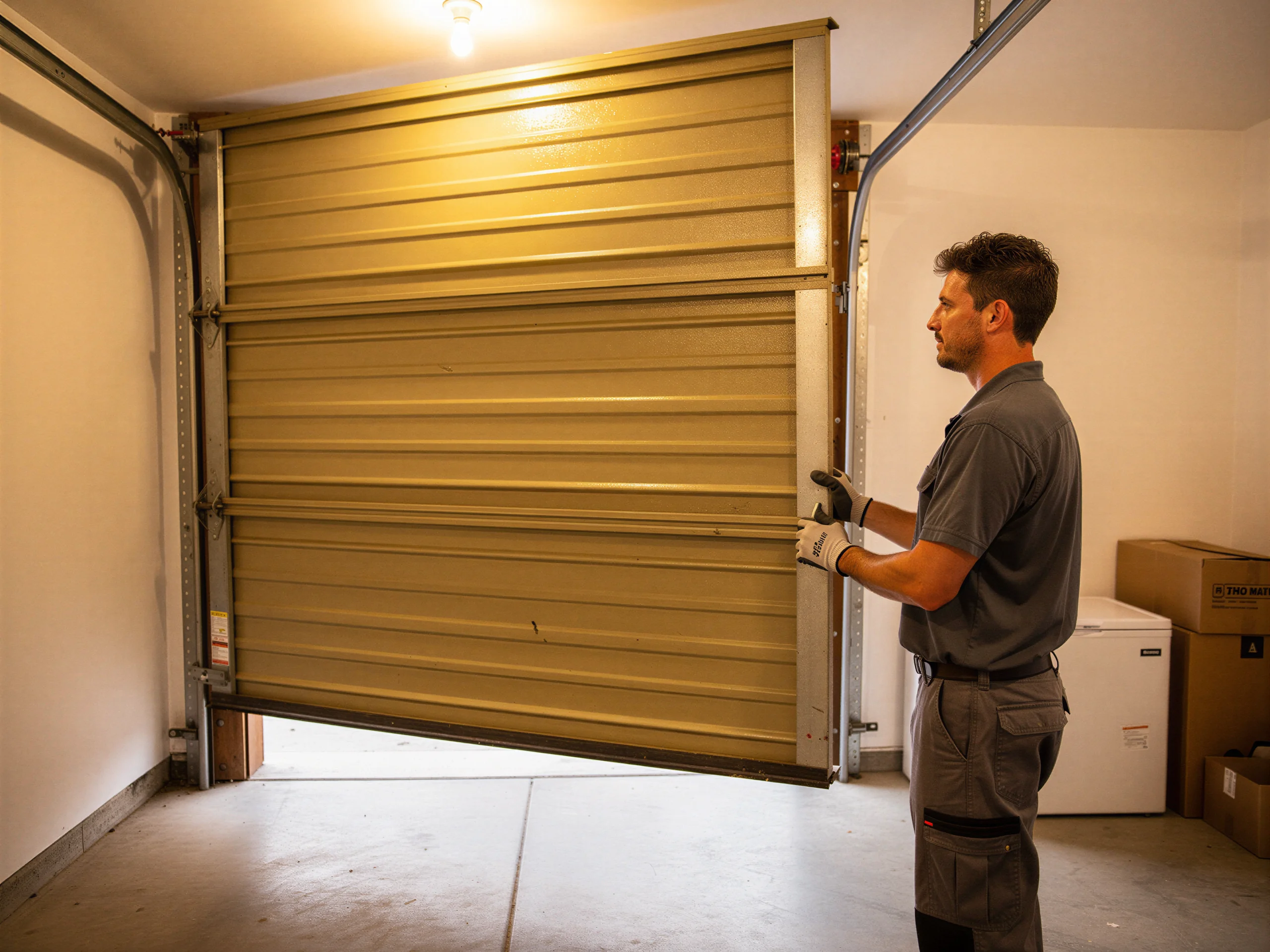
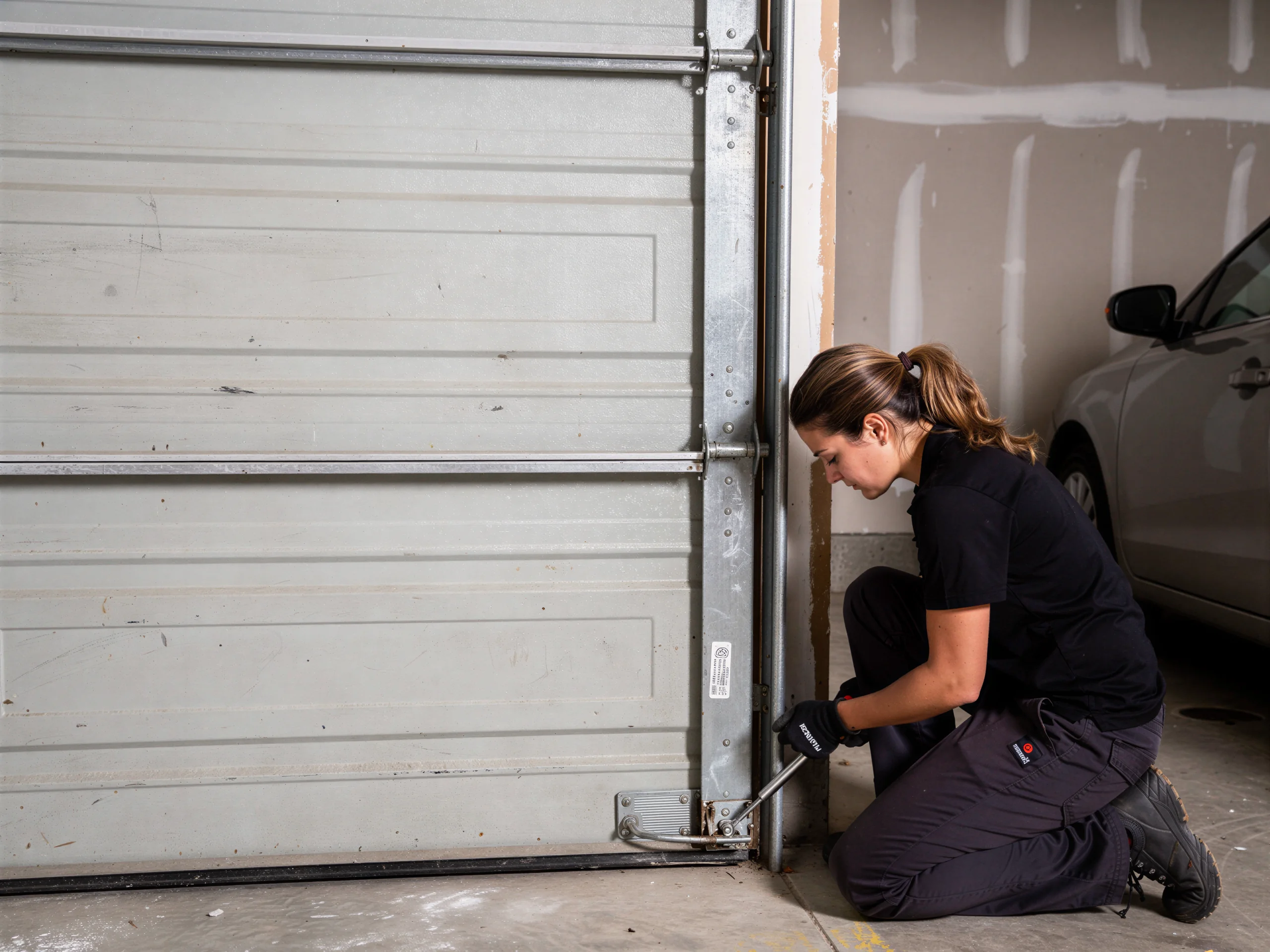
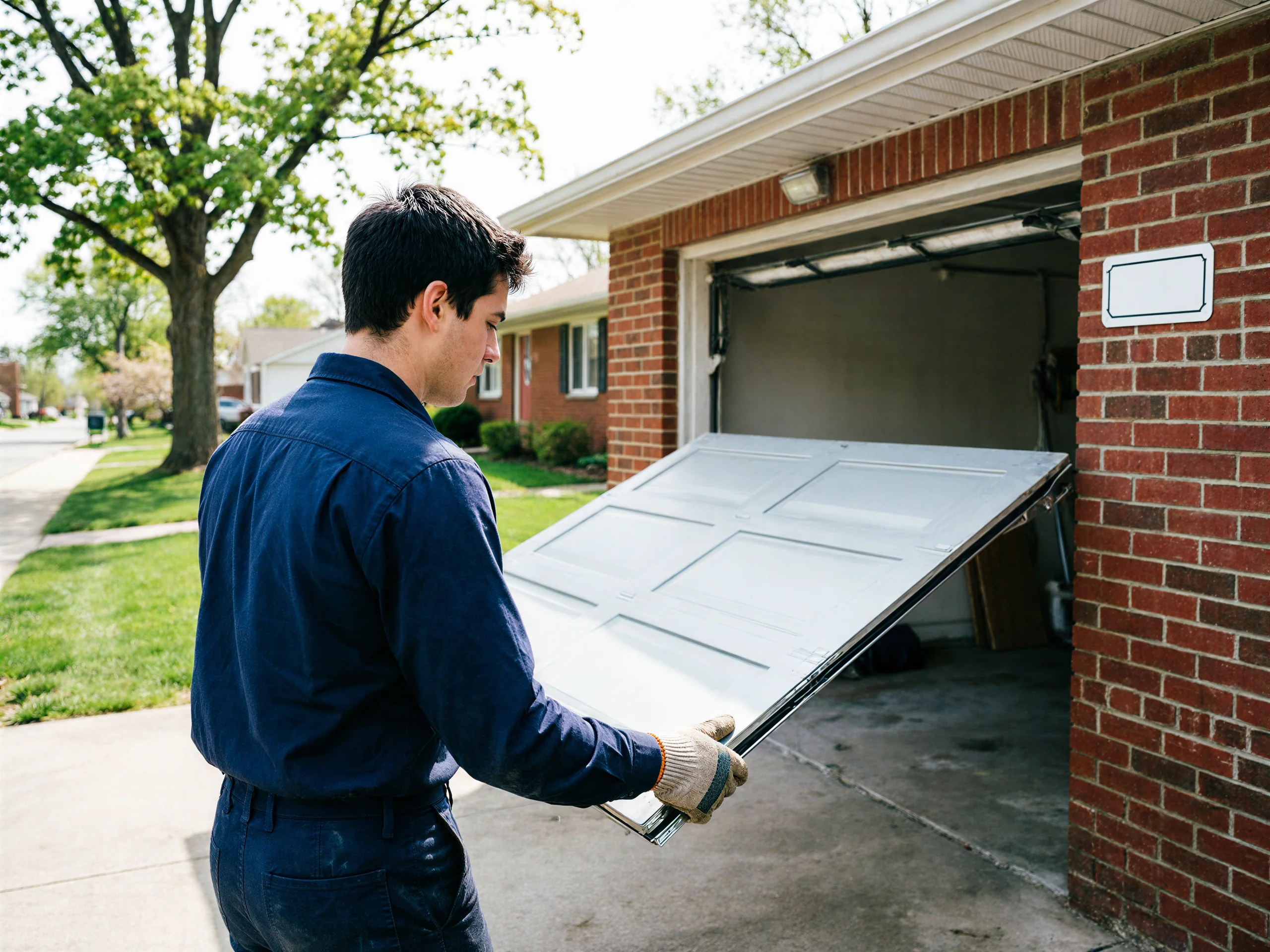
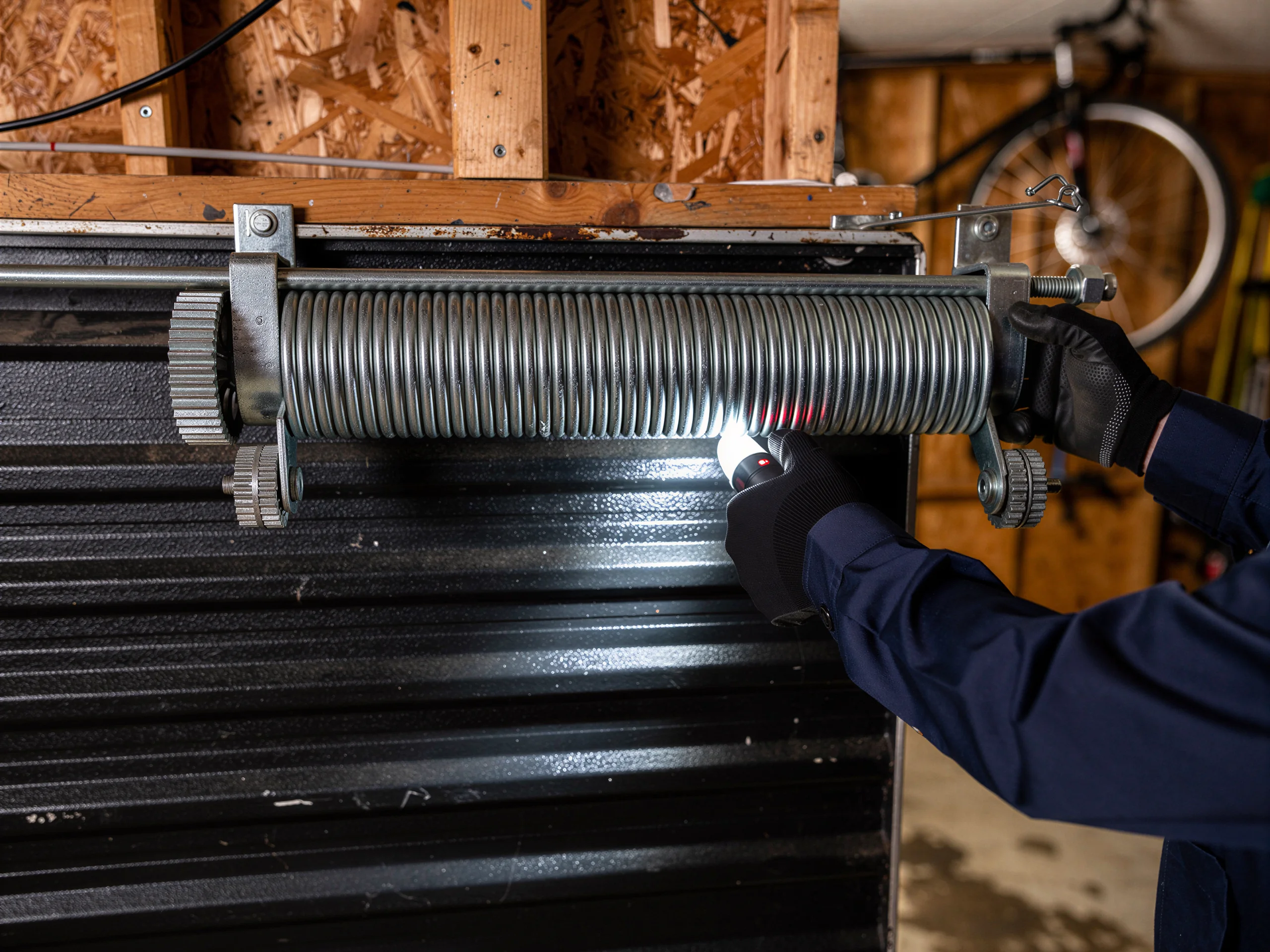
Geneva sits in a cold-climate zone, and a steel door built in the mid-1980s generally wasn't insulated to today's standard - many are a single steel skin over the frame, with no foam core. Over repeated winters, that uninsulated steel contracts and expands at a different rate than the galvanized torsion spring mounted against it, which speeds up metal fatigue in the spring well before it would fail on a newer, insulated door.
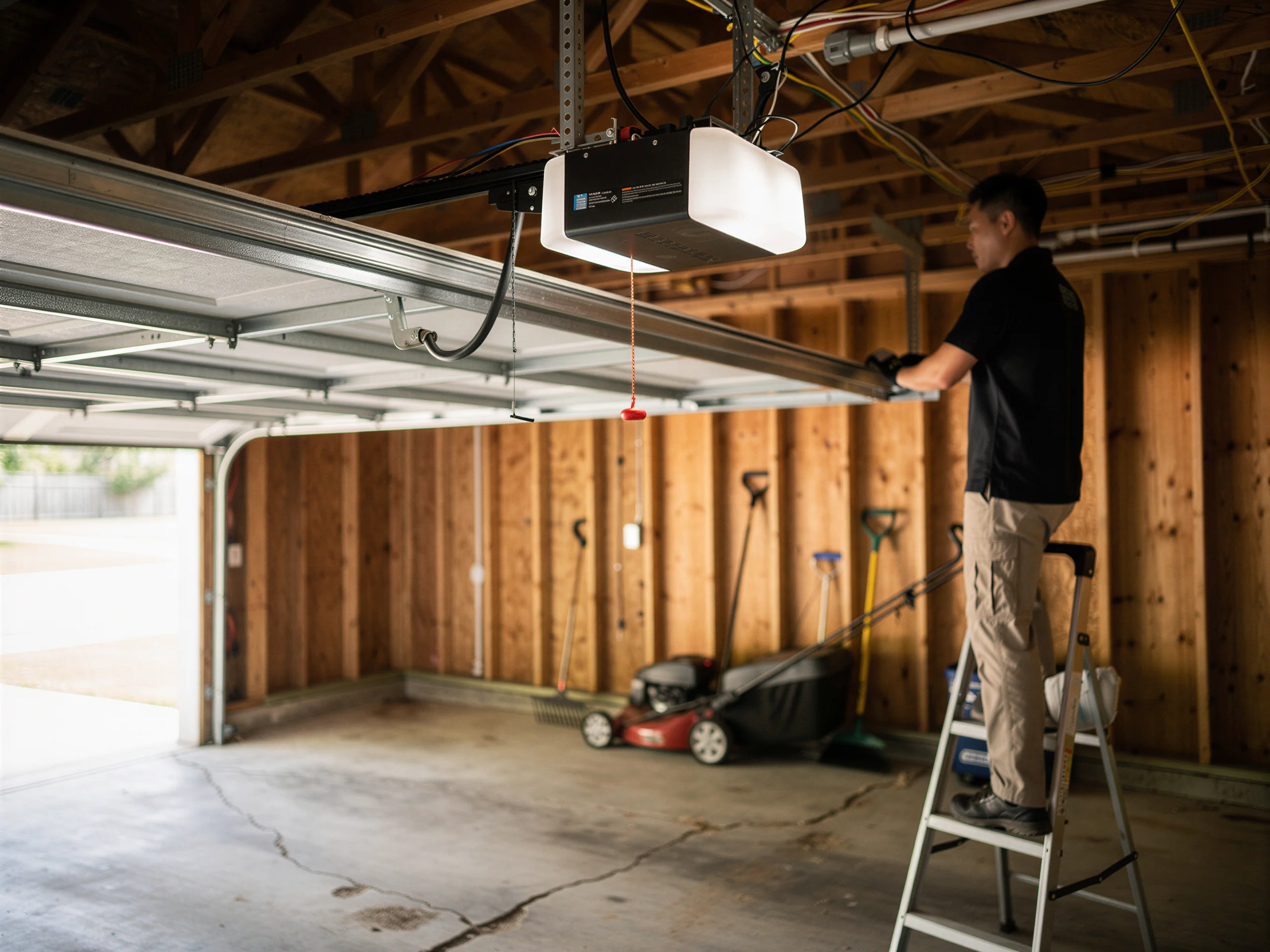
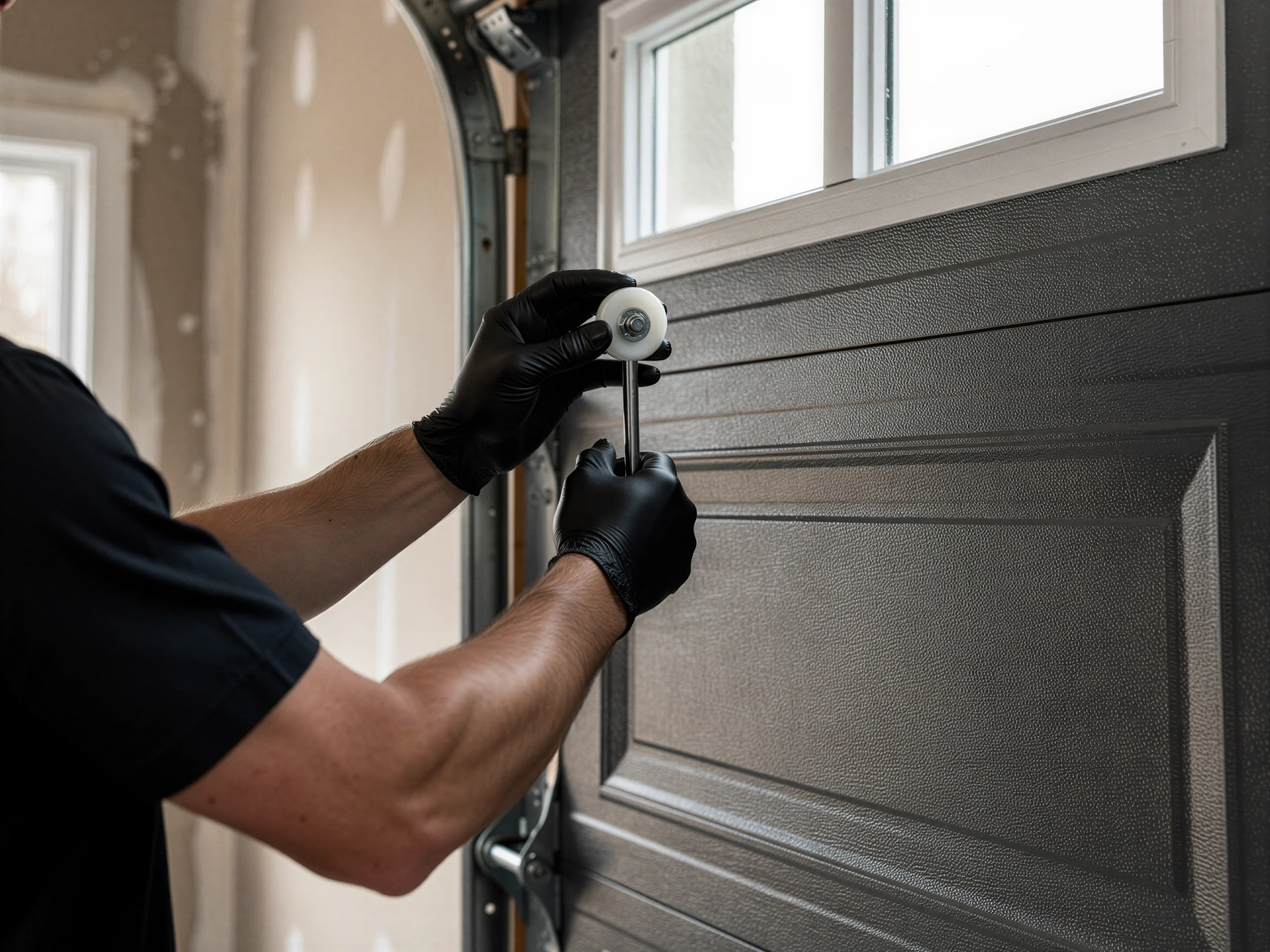
The age of the housing stock matters as much as the climate. A door and opener installed when Geneva was being built out in the 1980s and 90s have now outlived the service life most manufacturers design for, and replacement parts for that generation of hardware are getting harder to source exactly - springs, yes, but drum sizes and track brackets from that period sometimes need an adapted fit rather than a drop-in match.
That combination - original-era hardware plus decades of cold-weather cycling - is why the failures we see in Geneva skew toward full spring and cable replacement rather than a quick adjustment.