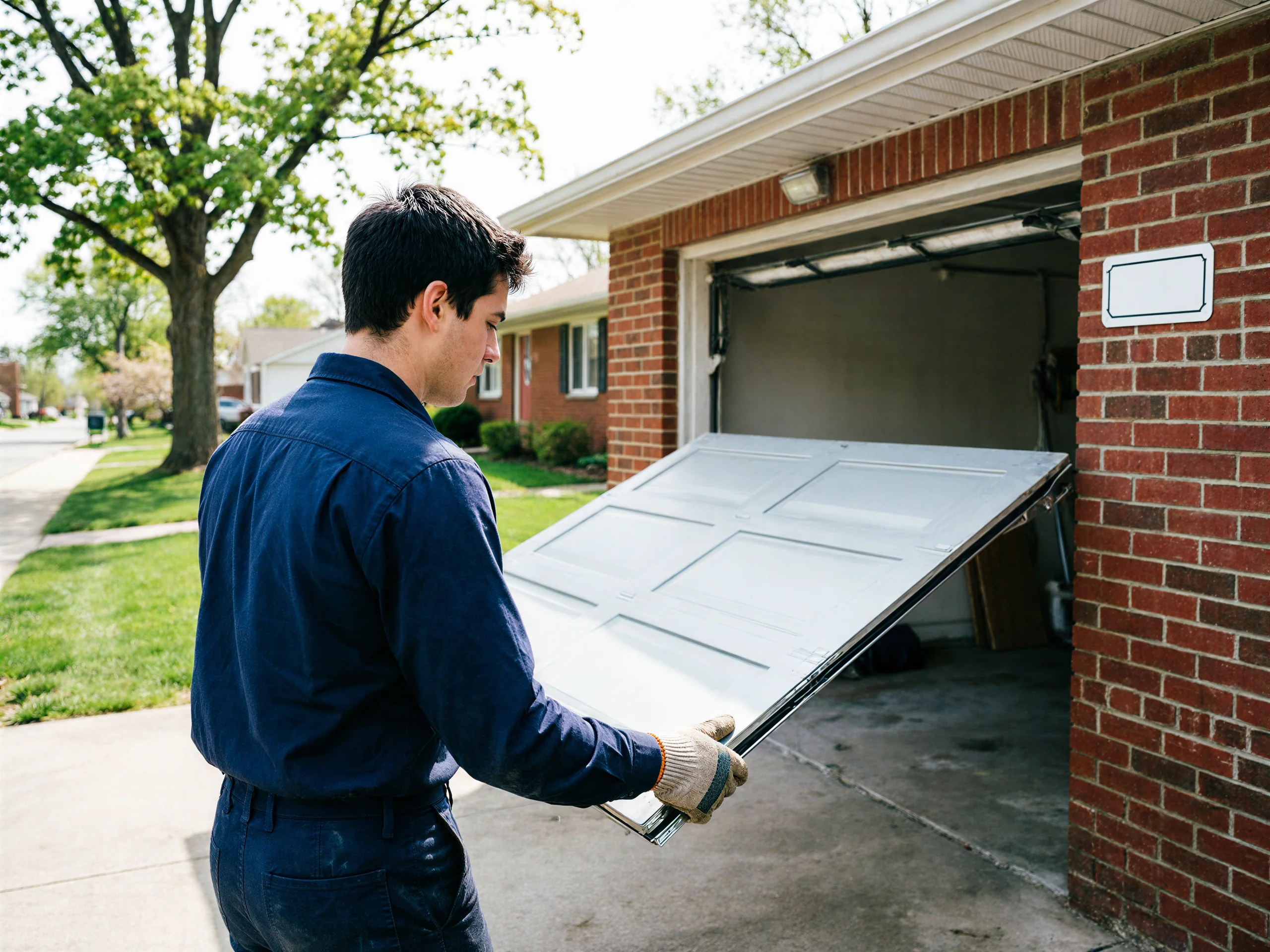
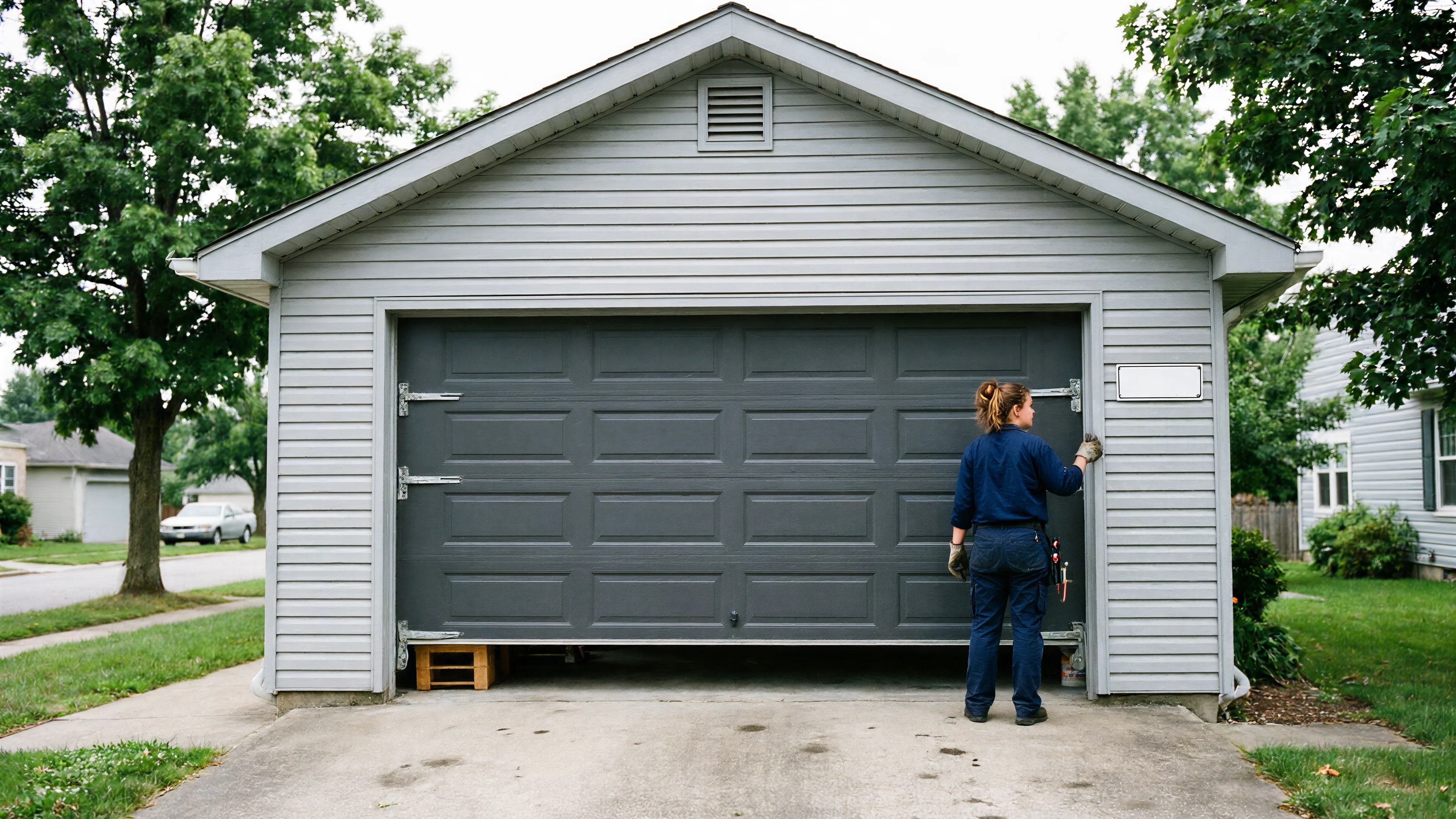
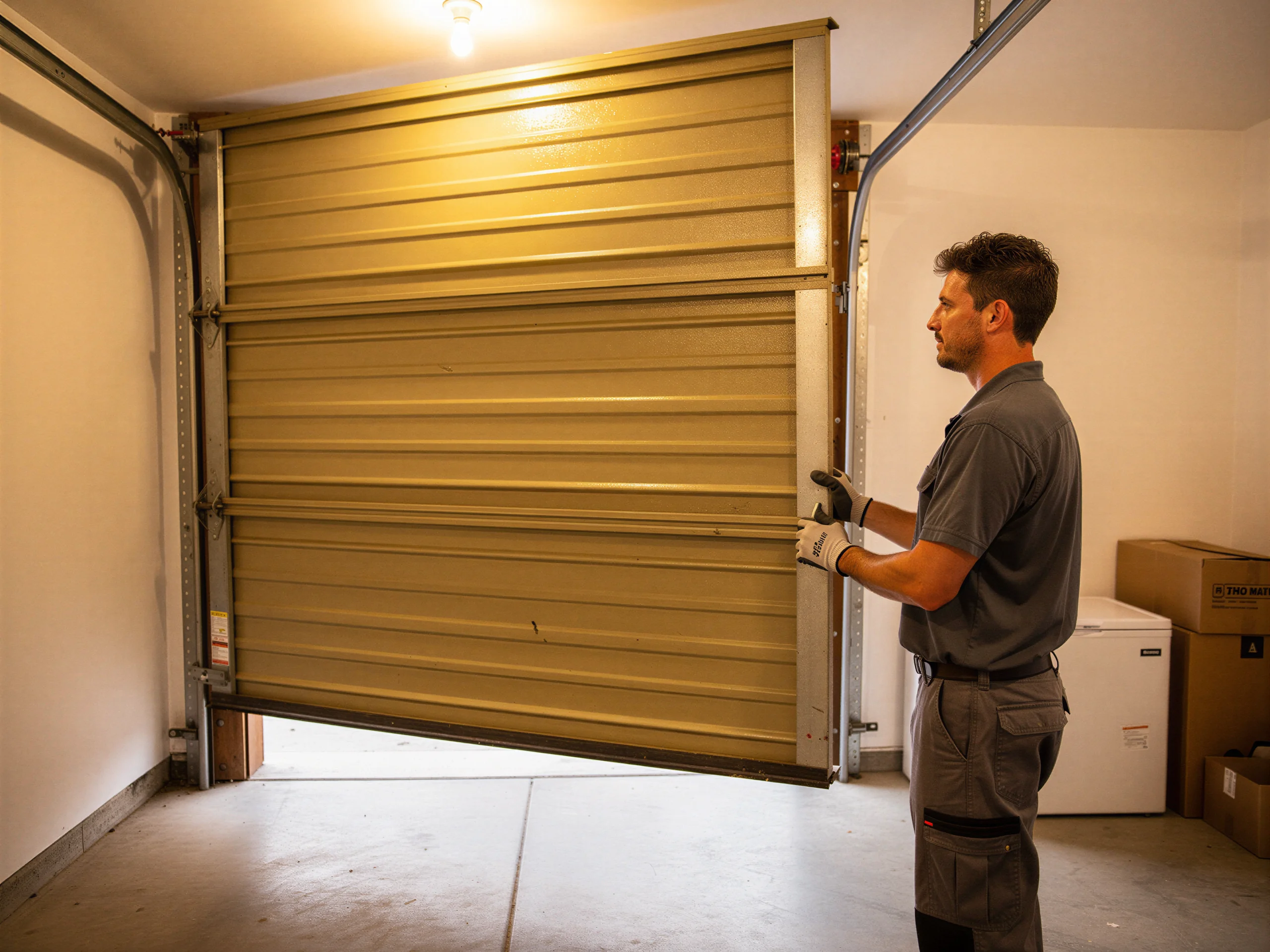
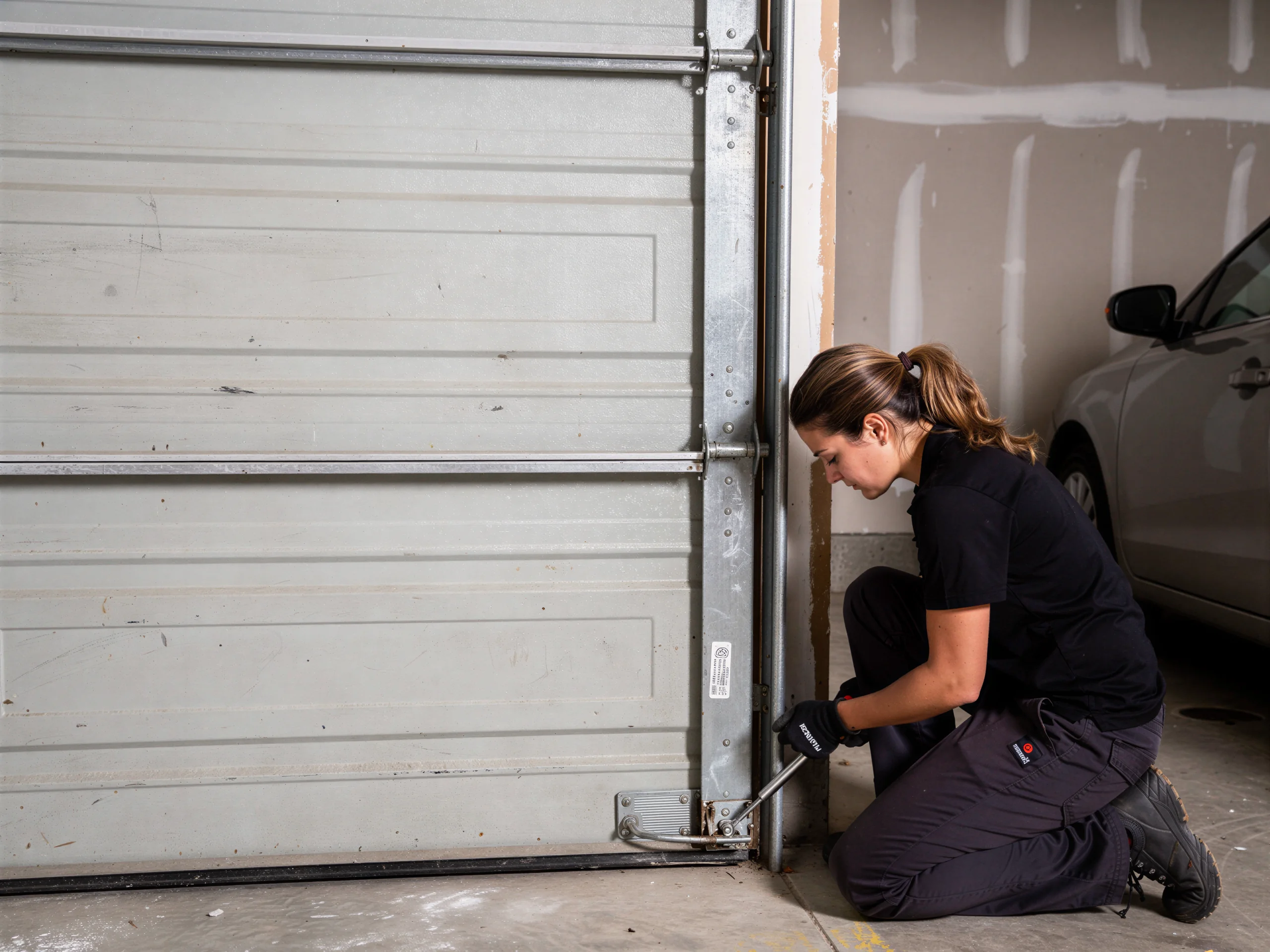
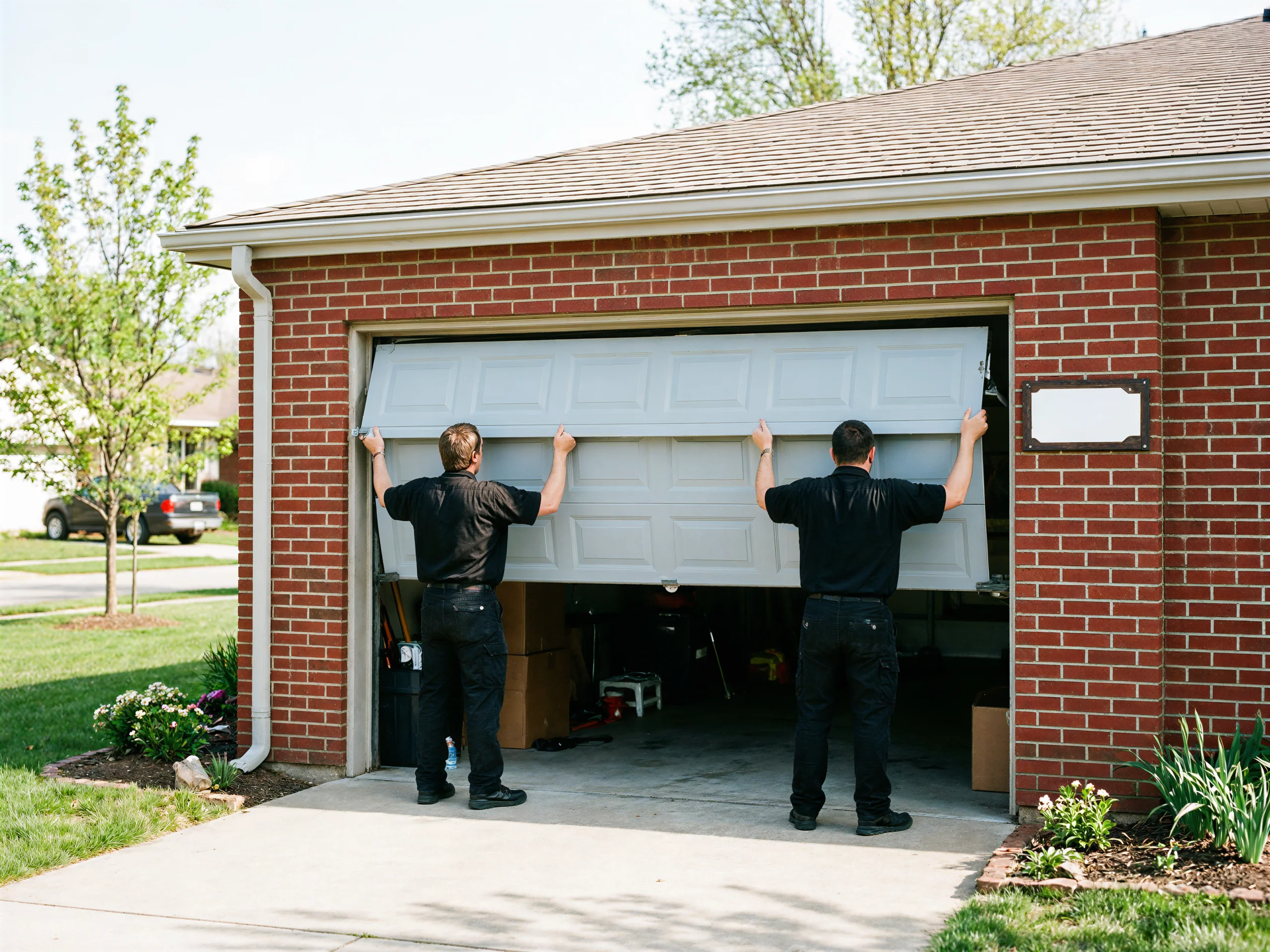
Panel failure here tracks pretty directly with two things: the age of the house and the winters. Most of the housing across this service area - 36 named communities, mostly carrying 1980s and 90s stock - still has its original door or a direct replacement of the same vintage. Steel from that era wasn't insulated the way current doors are, and after 30-plus years of freeze-thaw cycling in a cold climate band like ours, the seams and foam bonding inside the panel weaken well before anything looks visibly wrong from the driveway.
That weakened panel is primed to fail at the next hard knock - a backed-into bumper hit, a gust that catches an open door, ice buildup at the bottom seal that cracks the lowest section when the door closes on it. In a warmer climate the same age of door might go another decade without a problem, because it's not cycling through freeze and thaw every winter.
It's also why matching parts gets harder the longer a house has stood: a panel ordered new in 1985 isn't on anyone's current parts list in 2024, and a house built near the median year for this area is now old enough that the original manufacturer may not carry it at all.