Gasket mismatch wind noise
Order the wrong panel and it won't gasket against its neighbors, which means wind noise, water at the bottom seam, and a door that racks instead of rolling square.
Romeoville, Plainfield
Romeoville homes built mostly around 1998 still run original steel panels. We match and swap damaged sections from our Plainfield shop, 7 miles out.
DIY or pro
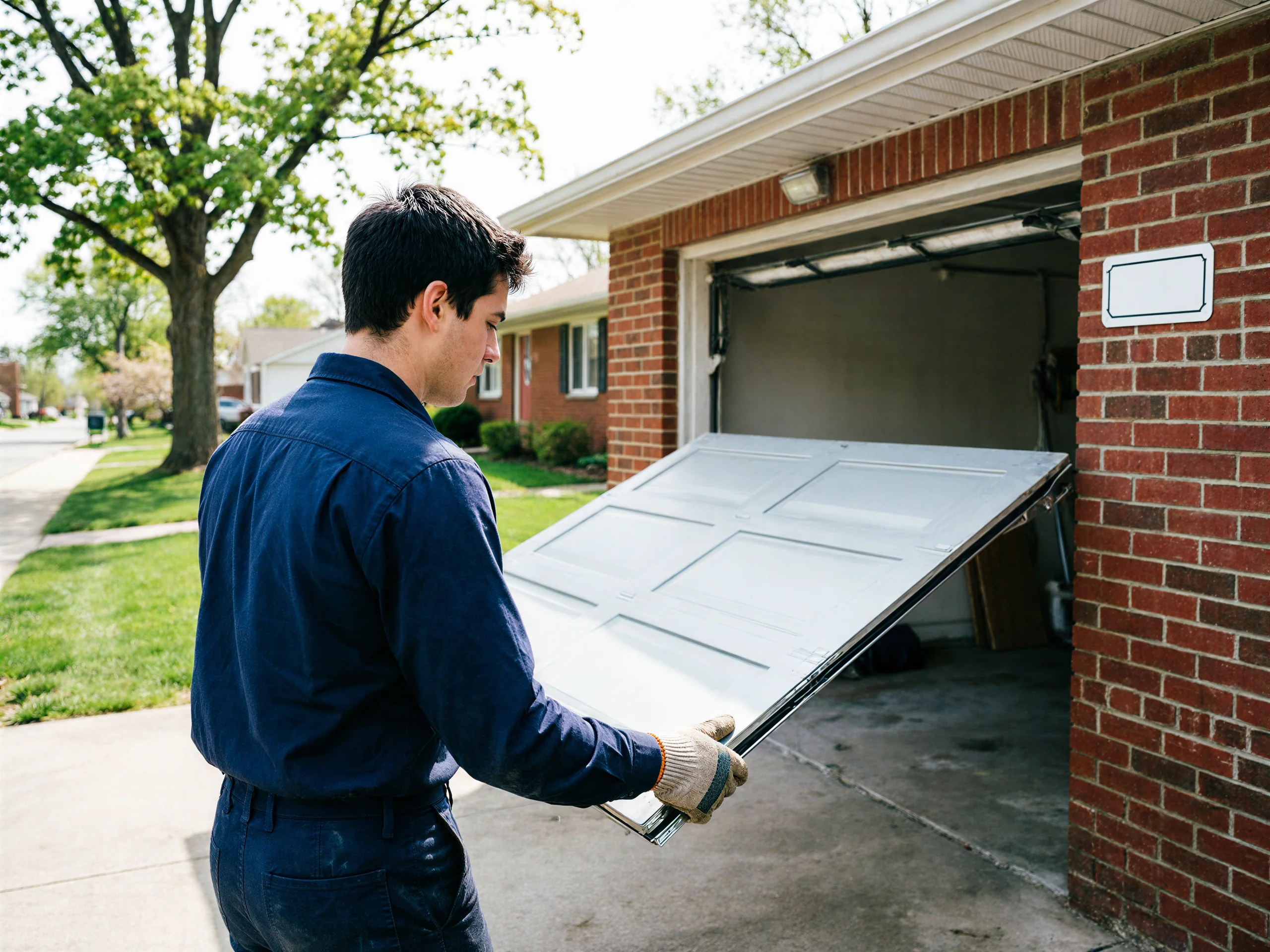
A single dented panel on a sectional door looks like a bolt-off, bolt-on job, and on paper it is. The trouble starts with matching. Most houses in Romeoville went up around 1998, a decade or more newer than the 1985 median you'll find across the wider service area, so what's hanging on your track is a steel sectional from that generation - a specific panel height, a specific rib profile, a specific color coat that's been sun-fading for over twenty-five years.
Order the wrong panel and it won't gasket against its neighbors, which means wind noise, water at the bottom seam, and a door that racks instead of rolling square.
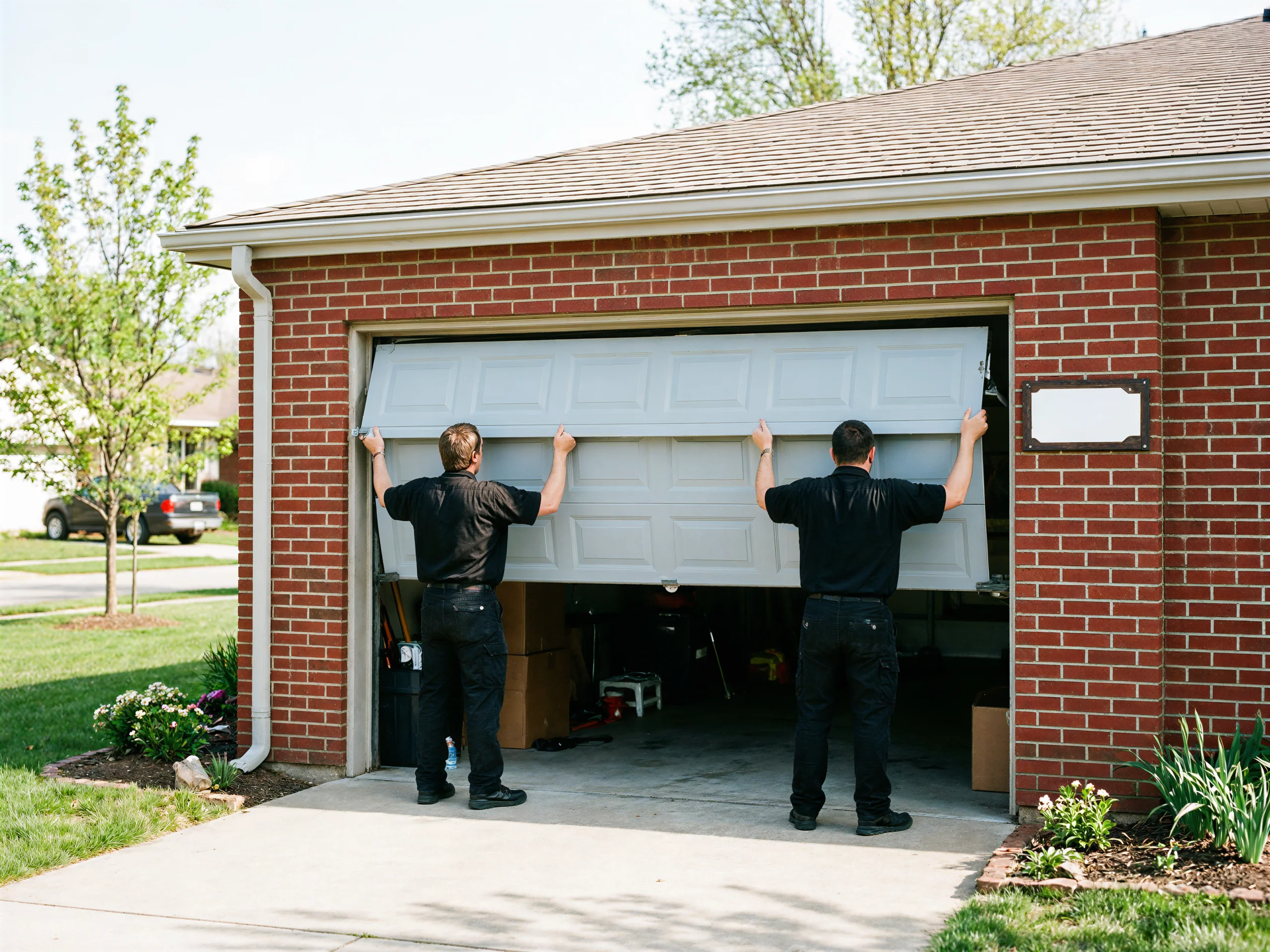
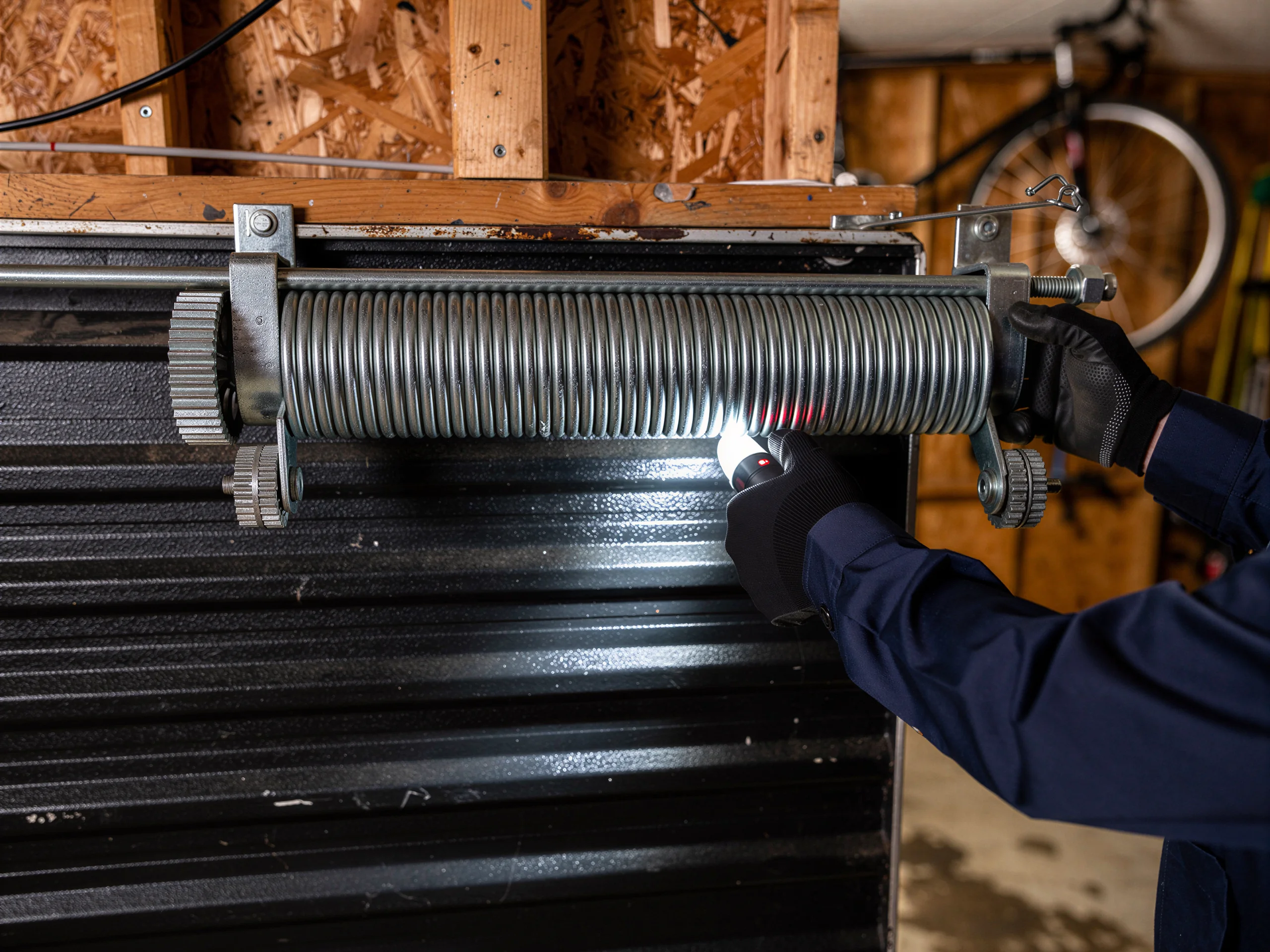
You can pull the damaged section yourself if you've got clamps to hold the door at height and you're comfortable with the spring staying loaded the whole time.
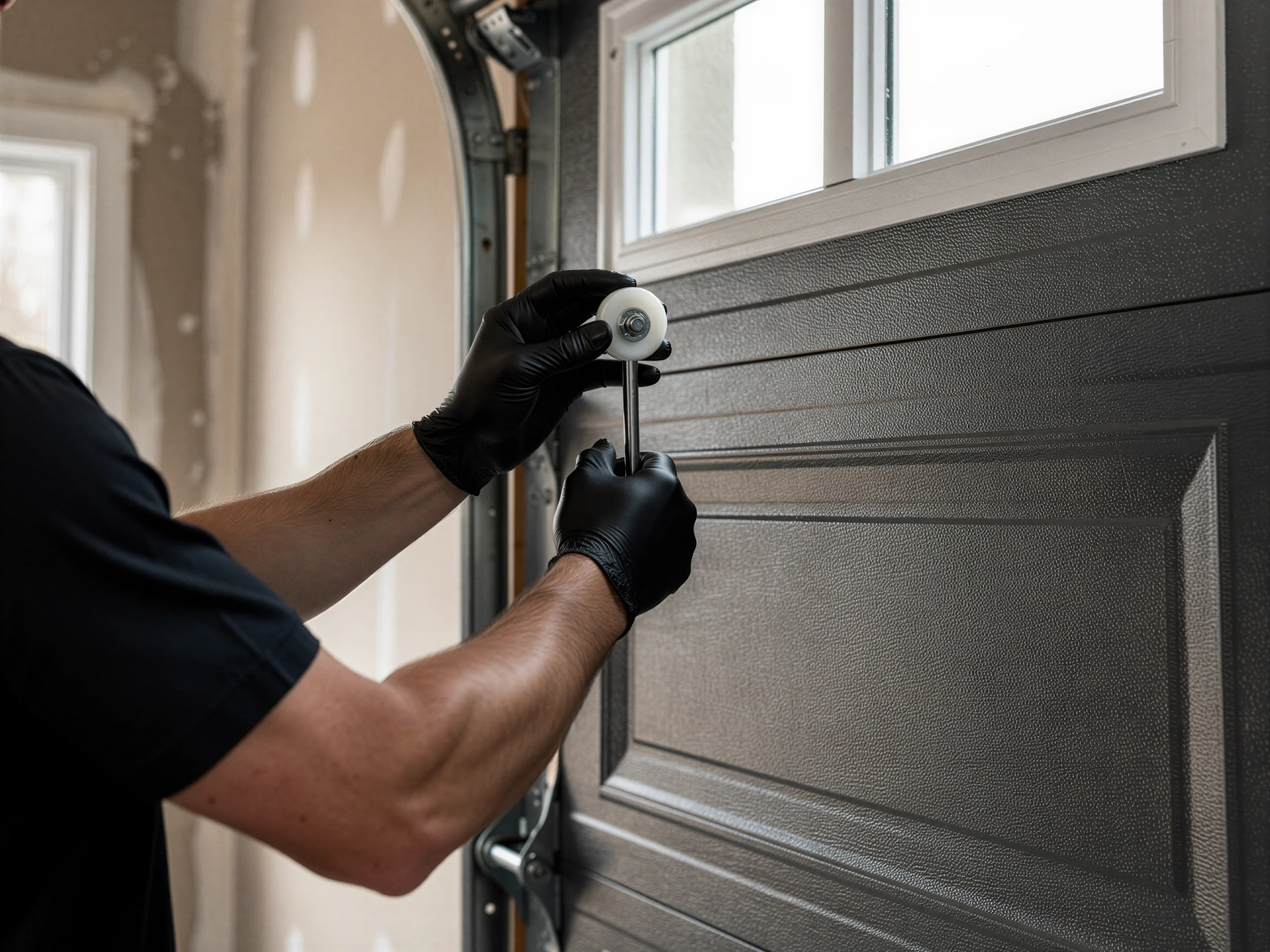
What trips people up is the hardware transfer - hinges, rollers, and end stiles off the old panel don't always bolt straight onto a reordered replacement without shimming. If the section is on the bottom with the opener bracket attached, leave that one alone.
Local causes
With roughly 13,064 households in Romeoville, most built inside a fairly tight fifteen-year window, the panel failures we get called for aren't random - they cluster around the same handful of door models and the same wear pattern. A car bumper or a thrown snowblower chute dents the bottom panel; nobody notices the stile has also bent until the door starts binding on the track. In this cold-moderate climate band, that bent stile matters more than it would somewhere mild - the steel skin contracts in winter and a panel that's slightly out of square will crack its paint seam and start rusting from the inside within a season or two. At a median household income near $100,022, most owners we talk to want a matched panel swap, not a full door, because the track, springs, and opener are usually still in good shape at this age. The mistake is waiting through a winter on a bent panel hoping it'll hold - by spring the roller's chewing a groove into the track and that's a second repair.
The repair
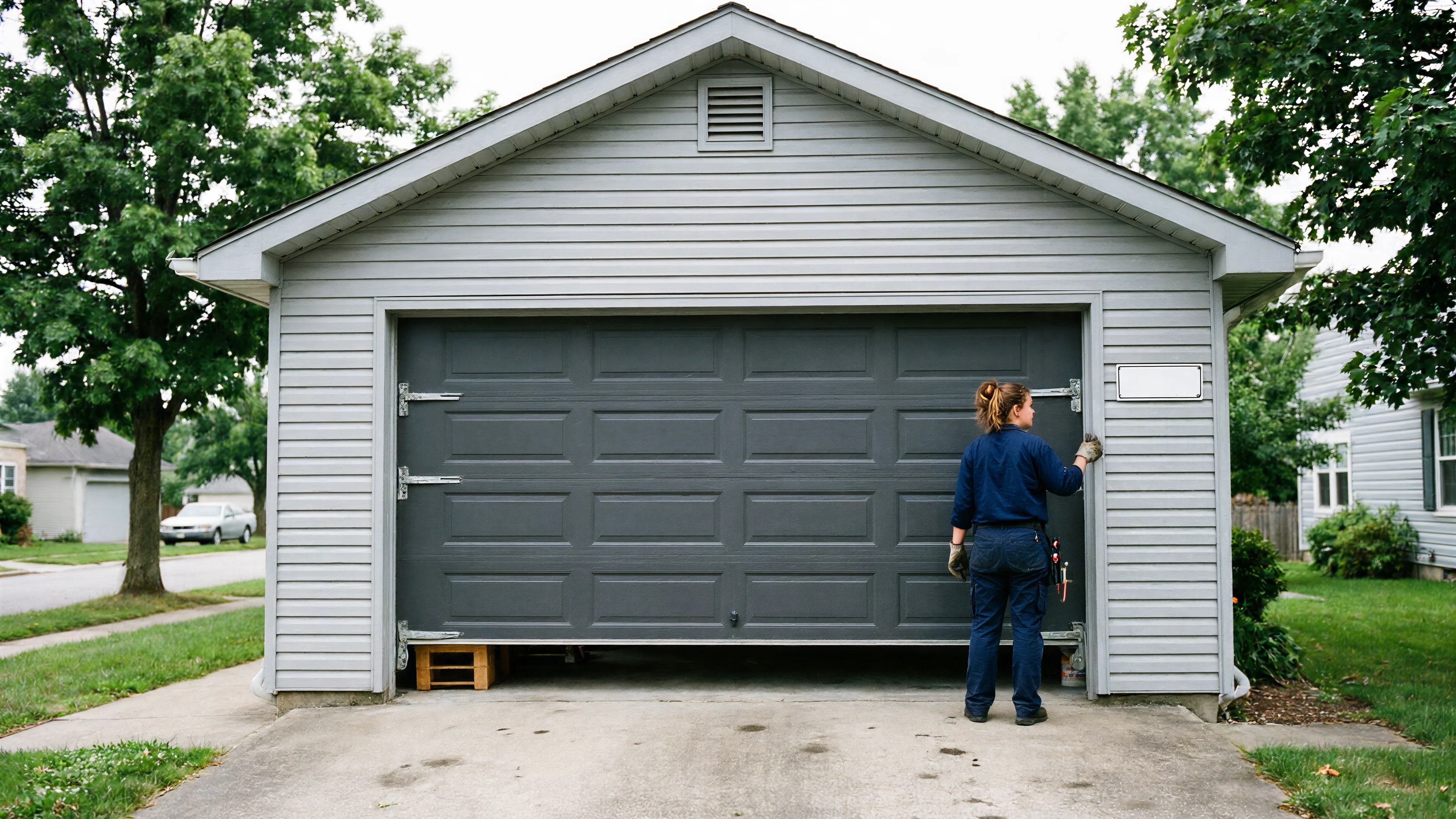
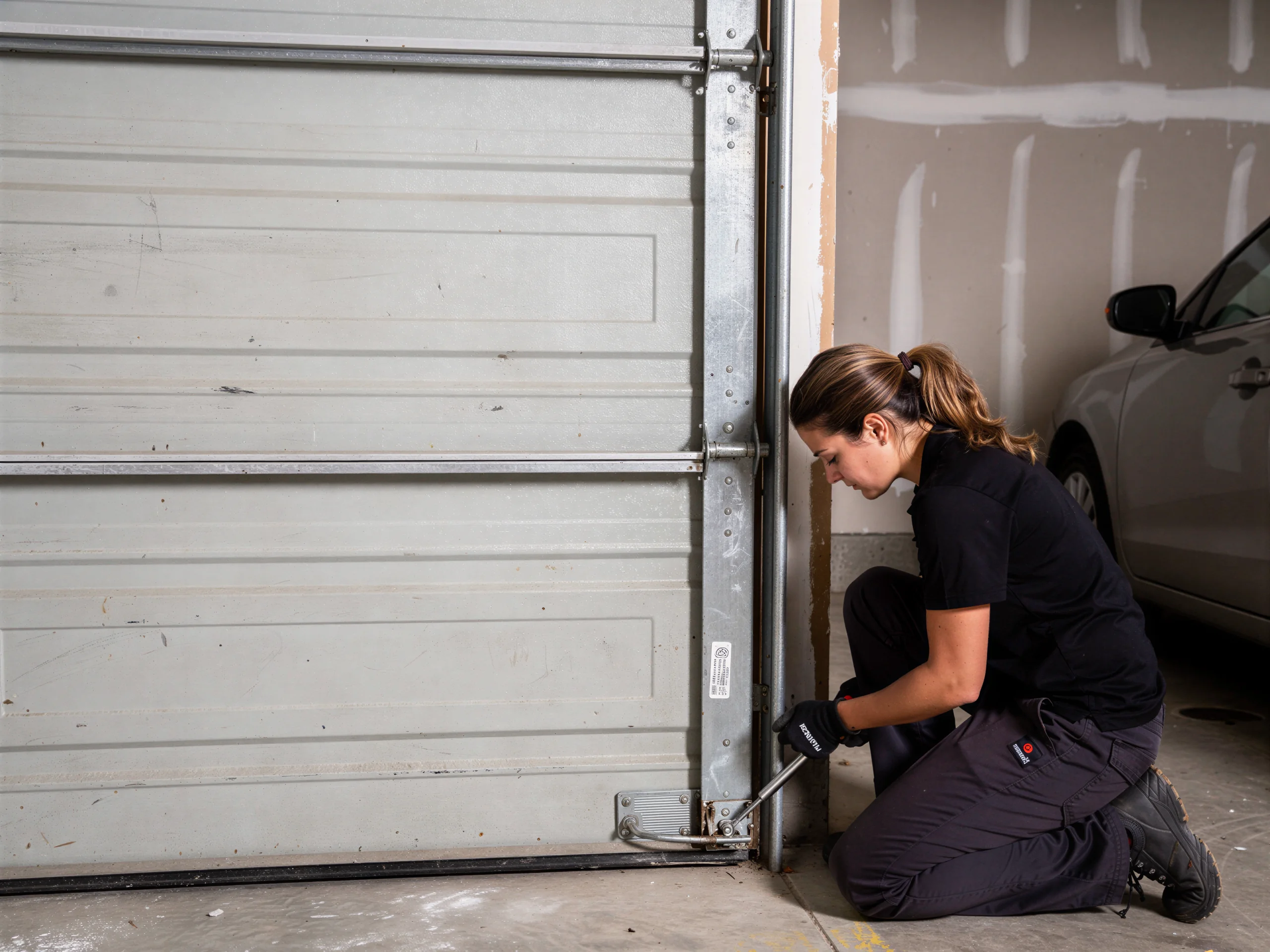
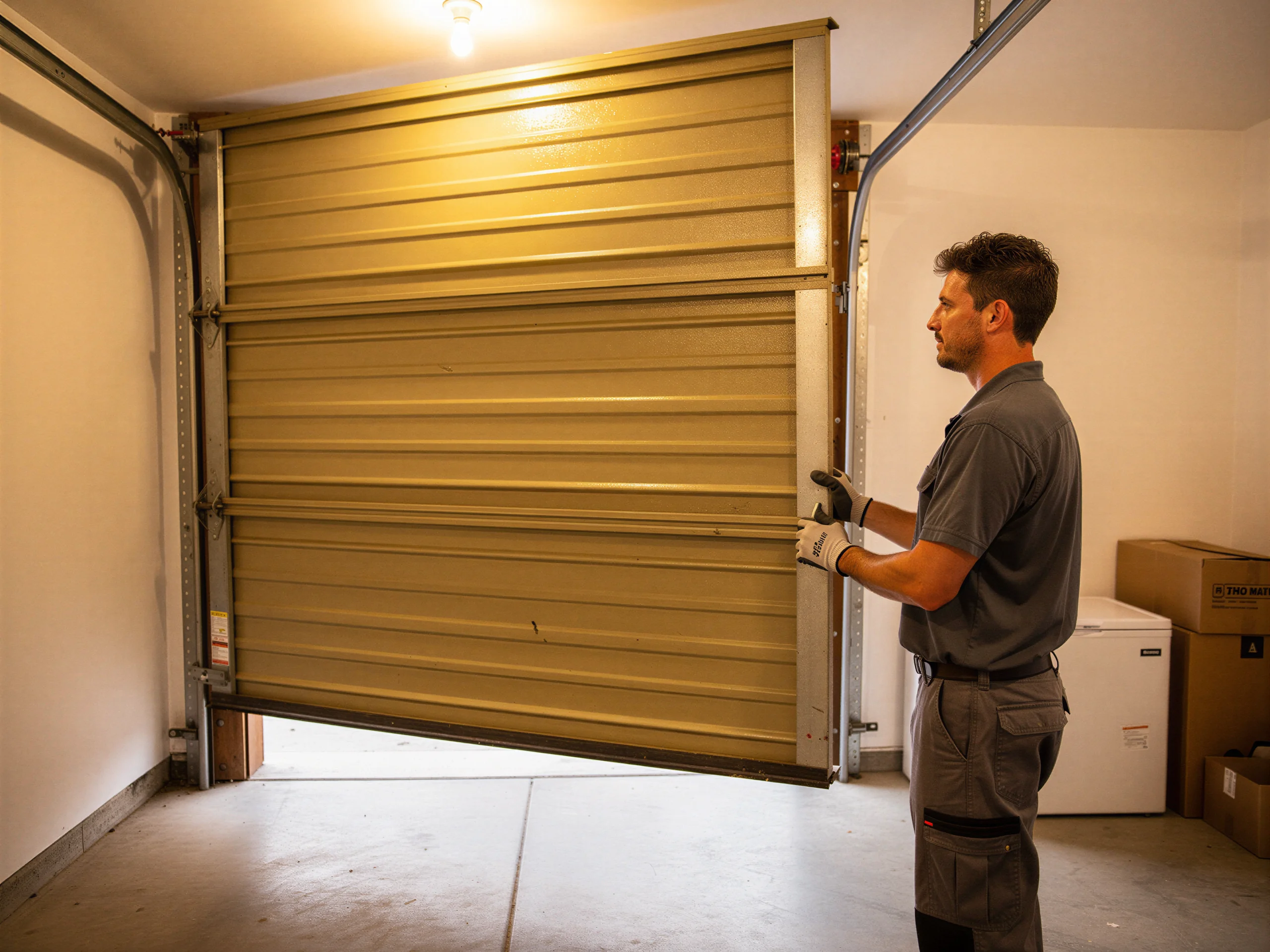
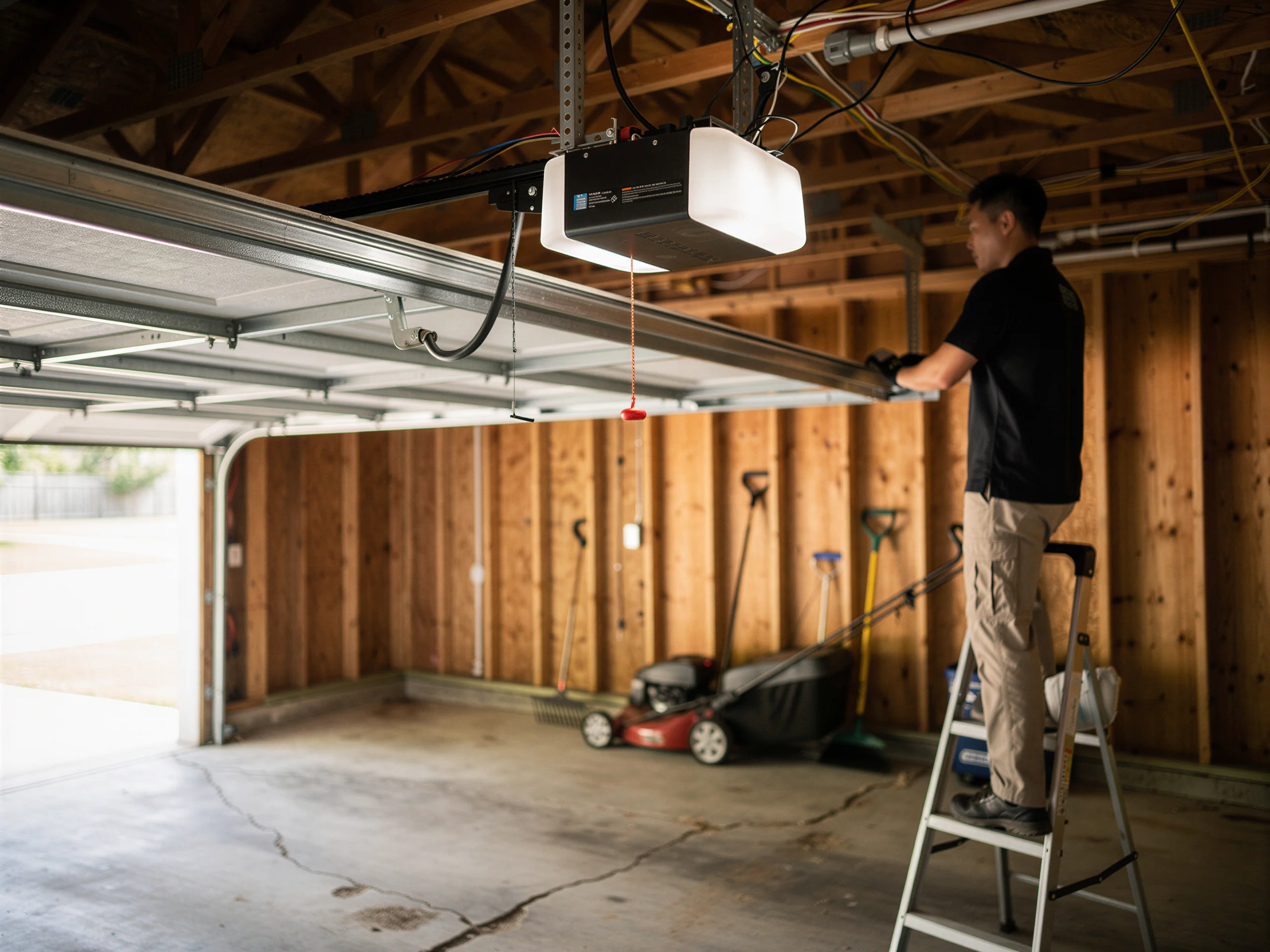
Romeoville sits seven miles from Plainfield, close enough that we don't have to guess what's on the truck before we leave. The job itself runs the same whether the dent is cosmetic or the stile's bent: disconnect the opener, lock the door at working height, pull the fasteners linking the damaged section to its neighbors above and below, and lift it clear without letting the cable track shift.
The new panel gets the salvaged hardware - hinges, roller brackets, end caps - transferred over so the color and texture match rather than looking like a patch.
Then it's a matter of leveling the section back into the track, re-threading the cable guides, and checking the door swings true through a full cycle before the opener gets reconnected.
Lead time on an exact-match panel depends on what the manufacturer still stocks for a door that age; we tell owners up front if a part has to be special-ordered rather than promise a same-visit fix we can't back up.
Warning signs
The giveaway on a late-90s steel door isn't always a visible dent. Sometimes it's a rattle at one spot on the track every time the door runs, or a seam that's started to bubble paint from rust underneath.
If one panel sits slightly forward or back from the ones around it, the stile behind it has probably bent, even if the skin still looks straight from the driveway.
A door that used to close flush against the weather strip and now leaves daylight at one corner usually traces back to a panel that's no longer square to its neighbors. None of these need a full door replacement - they're panel-level problems on hardware that, for a house this age, is likely still original from 1998.
The one thing we won't do is sell a panel swap on a door where the track itself has rusted out or the frame's shifted; at that point a patch is a short-term fix and we'll say so.
On the truck
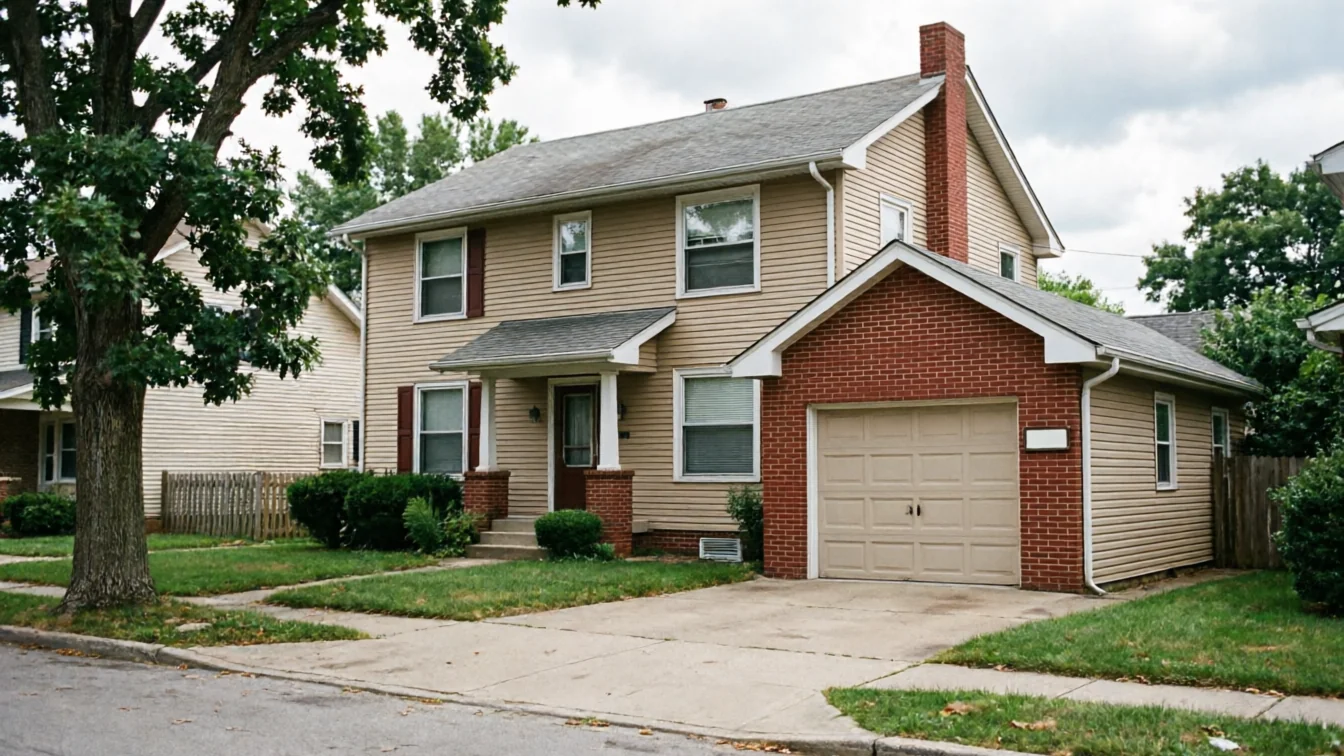
We carry common roller, hinge, and end-cap hardware on the truck for the door generations that match Romeoville's housing stock, so the hardware transfer side of a panel job rarely waits on parts. The panel itself is the piece that sometimes has to be ordered - manufacturers don't keep every color and rib pattern from the late 90s in constant supply, and we'd rather tell you that on the first visit than promise a same-day finish we can't deliver. What we do carry is enough to get a damaged section off safely, protect the opening overnight if needed, and come back with the exact match rather than a close-enough substitute that'll show as a different shade once the sun's been on it a year.
Questions
Usually close, not always exact - factory steel coatings from that era have faded unevenly over twenty-five years of sun. We order the manufacturer's current match for your panel profile and color code, but a visible shade difference on an otherwise faded door is possible. We'll tell you before ordering if we expect a noticeable gap.
Often yes, if the track, springs, and opener are still sound, which is common on doors from this build era. A single-panel swap costs far less than a full door and keeps the working hardware you've already got. We'll say so plainly if the frame or track shows enough wear that a panel swap wouldn't hold.
We run out of Plainfield, about seven miles away, so travel time is short, but we don't promise a fixed response window here - it depends on the day's schedule and whether your panel needs ordering. Call and we'll give you a real estimate, not a generic one.
On steel sectional doors from the late 90s, a bent stile or slightly out-of-square section lets moisture sit in the seam instead of shedding off. In a cold-moderate climate, that trapped moisture freezes and thaws repeatedly, which accelerates the rust. Fixing the alignment, not just the rust spot, is usually what stops it coming back.
Explore more
Ready when you are
Plainfield Garage Door Pros repairs and installs garage doors, springs and openers in Plainfield, IL and the surrounding area.